Is the Houston Housing Market Going to Crash in 2026? An Honest Answer From a Houston Realtor
By Bobby Mohebbi, REALTOR® | Mohebbi Realty Group, Keller Williams Signature | Serving Katy, Cypress, Fulshear, Sugar Land & the Greater Houston Area
Quick answer: No, the Houston housing market is not going to crash in 2026. The data points to a balanced, stabilizing market — not a collapse. As of mid-2026, Houston's median sale price sits near $350,000, roughly flat to slightly up year-over-year, inventory has returned to a healthy 5-month range, and mortgage rates are hovering in the low-to-mid 6% range. A true crash requires weak employment, reckless lending, massive oversupply, and waves of forced selling. Houston has none of those conditions right now. What we are seeing is normal, healthy moderation after several years of unusually fast growth.
If your search history is full of phrases like "Houston housing market crash 2026" or "will home prices drop in Houston," you are far from alone — and your concern is understandable. Rates were high for a long stretch, headlines swing wildly, and social media keeps recycling doom-and-gloom predictions. Below, I'll walk you through what the numbers actually say, what a crash would really require, and what it all means whether you're planning to buy, sell, or simply stay put.
Is the Houston housing market going to crash in 2026?
No. Based on current data, a Houston housing market crash in 2026 is highly unlikely.
Here's the distinction that matters most: a crash and a slowdown are not the same thing. A crash is a sharp, sustained collapse in home values driven by economic distress. A slowdown, or "rebalancing", is what happens when a red-hot market cools back toward normal. Houston is squarely in the second category.
The intense seller's market of 2021–2022, with its bidding wars and homes selling in days, has given way to something calmer and, frankly, healthier. Homes now take longer to sell, buyers have room to negotiate, and prices have flattened rather than fallen off a cliff. That's not dysfunction. That's a market finding its footing.
Nationally, the consensus among housing economists echoes this. The National Association of REALTORS® has repeatedly signaled that home prices nationwide are in no danger of a broad decline, and NAR has specifically pointed to Houston as a city creating more housing supply — which keeps prices reasonable while continued job growth brings buyers into the market. That combination is the opposite of a crash setup.
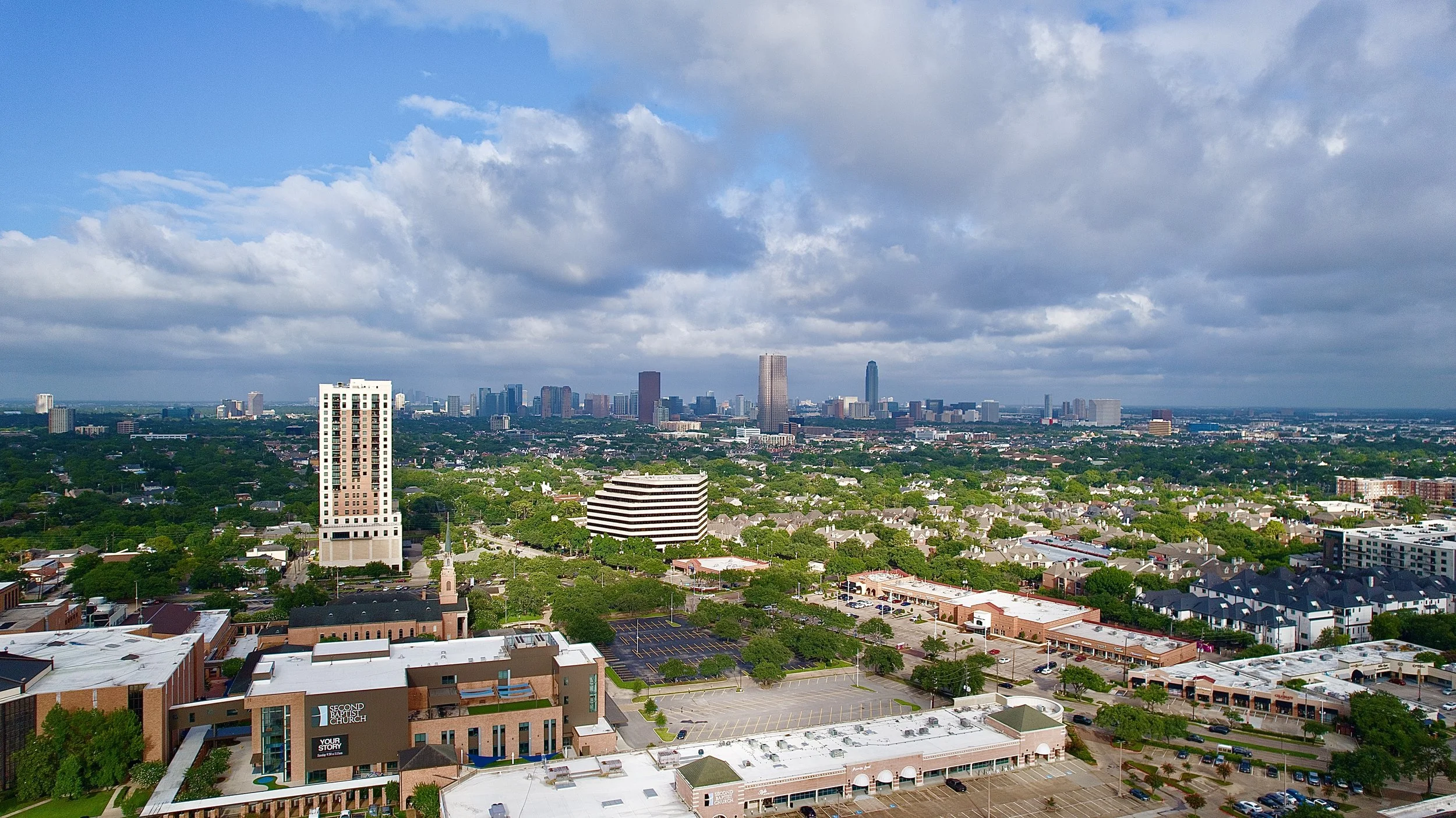
What would actually have to happen for the Houston housing market to crash?
A real estate collapse isn't random. It requires a specific combination of conditions to line up at the same time:

Widespread job losses. Crashes follow employment collapses, because people who lose income can't make mortgage payments.
Reckless lending. The 2008 crash was fueled by risky, no-documentation loans handed to borrowers who couldn't afford them. Lending standards today are dramatically stricter.
Massive oversupply. Prices crater when far more homes flood the market than there are buyers to absorb them.
Forced selling. A true downturn needs waves of distressed sellers — foreclosures and short sales — dumping properties at any price.


Now compare that checklist to Houston in 2026:

Employment is strong and diversified. Houston's economy is no longer just an oil town.
Lending is sound. Today's borrowers are qualified and well-documented.
Supply is balanced, not flooded. Inventory has risen back to roughly a 5-month supply — the textbook definition of a balanced market, not a glut.
There is no wave of forced selling. Foreclosure activity remains low, and most homeowners are financially stable.

When you hold Houston up against the actual ingredients of a crash, the recipe simply isn't there.
Are Houston home prices dropping in 2026?
Houston home prices are essentially flat in 2026 — with very modest movement in either direction depending on the neighborhood and price point, not a broad decline.
Here's what the mid-2026 data shows across major sources:
The median sale price across Houston is hovering right around $350,000, up a slight amount year-over-year in recent Redfin data.
The Houston Association of REALTORS® (HAR) reports the 12-month average sale price near $331,700, down about 1.2% from the prior year — a small dip, not a slide.
The metro-wide median list price sits near $345,000 As of JULY 8TH, 2026!
Notice the theme: small numbers, moving gently. A percentage point up here, a percentage point down there. That is the statistical signature of a stabilizing market, not a crashing one. After several years of rapid appreciation, some moderation is not only expected — it's healthy, and it's good news for affordability.
It's also worth remembering that Houston is not one single market. It's a collection of very distinct communities — Katy, Cypress, Fulshear, Sugar Land, Pearland, Spring, The Woodlands, and dozens more — each with its own price trends and inventory levels. A metro-wide average can mask meaningful differences from one area to the next. That's exactly why an address-specific analysis beats a headline every time. If you'd like to know what's happening on your street, reach out for a personalized market snapshot there's no cost and no pressure.
Why is Houston more stable than markets like Austin?
Houston is more stable than many fast-growing metros because it never overheated the way they did — and because its economic foundation is unusually broad.
Houston didn't experience the same vertical price spike. During the pandemic boom, some Texas markets saw valuations stretch dramatically. Houston's more abundant land supply, permissive development policies, and historically lower price floor meant home values never got as inflated here. Less inflation on the way up means less correction to absorb on the way down. The city that looked "boring" compared to flashier markets in 2021 is looking considerably more stable in 2026.
Houston keeps building. Because the region has room to grow and a builder-friendly environment, new construction continues to add supply and meet demand. Responsive homebuilding is a big reason Houston has historically avoided the dramatic price swings seen in geographically constrained cities.
The economy is genuinely diversified. Energy still gets the headlines, but over the past decade Houston has built serious scale in healthcare (anchored by the Texas Medical Center, the largest medical complex in the world), aerospace, logistics and the Port of Houston, and technology. That broad employment base sustains housing demand even when any one sector softens.
Houston has proven its resilience before. The region weathered the 1980s oil bust, the 2008 financial crisis, and the 2014–2016 oil slump. In each case, home values held up thanks to conservative lending and steady underlying demand. History doesn't guarantee the future, but Houston's track record through multiple cycles is reassuring.
People keep moving here. The metro has been adding well over 100,000 new residents in recent years, drawn by jobs, relative affordability, and no state income tax. More people means more housing demand — the exact opposite of the population loss that precedes real price declines.
What is the "lock-in effect," and how is it holding the market together?
The "lock-in effect" is one of the most important — and least understood — forces in the 2026 market.
During 2020–2022, a large majority of homeowners refinanced or purchased at historically low mortgage rates, many below 6%. Today, with rates in the low-to-mid 6% range, moving means trading that low rate for a higher one. Understandably, many owners are choosing to stay put — a phenomenon often called the "golden handcuffs" effect.
This matters for the crash question in a specific way: the lock-in effect actually protects prices. Because so many owners are reluctant to sell, the market never gets flooded with inventory. Fewer homes hitting the market at once means supply stays in check, which supports prices even as demand cools. It's a natural brake against oversupply — one of the very conditions a crash would require.
One related trend you may have read about is delisting. Houston's delisting rate rose meaningfully year-over-year, as some sellers pulled homes that didn't sell quickly. That can sound alarming, but it's often strategic — an owner resetting to relaunch later with better pricing or photos, or deciding to rent the home out instead and keep that low mortgage rate. Delisting is a sign of a patient market, not a panicked one.
Is 2026 a buyer's market or a seller's market in Houston?
Houston in 2026 is best described as a balanced market that tilts slightly in buyers' favor — a meaningful shift from the seller-dominated years of 2021–2022.
With inventory back to a roughly 5-month supply and homes taking longer to sell, buyers have regained negotiating leverage they haven't had in years. At the same time, well-priced, well-presented homes in desirable areas still attract strong interest and sell efficiently. It's not a buyer's paradise or a seller's paradise — it's a market where preparation and strategy matter more than timing the headlines.
What should buyers do in a balanced Houston market?
Use your leverage. With more listings and longer marketing times, you can often negotiate on price, ask for seller-paid closing costs, request repairs, or negotiate a rate buydown. You no longer have to waive every contingency to compete.
Consider the "date the rate" strategy. A common approach among Houston buyers right now is "marry the house, date the rate" — buy at today's price while competition is lower, then refinance if and when rates fall. Remember: you can refinance a rate, but you can't renegotiate the price you paid.
Look at new construction incentives. Builders across Houston's growing suburbs frequently offer rate buydowns and upgrades that can meaningfully lower your effective cost.
Get pre-approved and know your numbers. In a more analytical market, prepared buyers win.
If you're weighing a purchase, I'm happy to build a custom buyer strategy or new-construction consultation around your budget and timeline.
What should sellers do in a balanced Houston market?
Price to today's comps, not last year's peak. In a balanced market, an overpriced home sits, collects price reductions, and often sells for less than a home priced correctly from day one.
Present the home well. Professional photography, staging, and completed repairs matter more when buyers have options.
Consider offering a rate buydown. Funding a buydown can move a hesitant buyer faster than an equivalent price cut.
Plan for a longer timeline. Homes are taking longer to sell than during the frenzy — that's the new normal, not a sign of failure.
Curious what your home could realistically sell for in today's market? A free, no-obligation home valuation is the best place to start.
Houston housing market forecast: what to expect through the rest of 2026
Most forecasters expect Houston to finish 2026 much the way it started — stable, with modest movement rather than dramatic swings.
Prices: Expect roughly flat to low-single-digit changes metro-wide. One widely cited forecast projected the Houston metro median rising only a fraction of a percent over a twelve-month span — essentially flat.
Mortgage rates: The consensus points to rates holding in the low-to-mid 6% range through the back half of the year, with any meaningful drop uncertain and dependent on inflation.
Inventory: Likely to stay in a balanced range, giving buyers continued options and keeping bidding wars rare.
Activity: Steady rather than explosive, with pending sales showing pockets of renewed buyer interest.
The biggest risk for most people in 2026 isn't buying or selling — it's waiting without a plan. Trying to perfectly time the bottom rarely works, and when rates do eventually ease, history suggests competition returns quickly and negotiating leverage shifts back toward sellers.
Frequently asked questions about the Houston housing market in 2026
Will home prices drop in Houston in 2026? Houston home prices are expected to stay roughly flat in 2026, with small movements up or down depending on the neighborhood and price range. A broad, sharp decline is unlikely given strong employment, sound lending, balanced inventory, and continued population growth.
Is now a good time to buy a home in Houston? For financially prepared buyers, 2026 offers more negotiating leverage than any year since the pandemic — more inventory, longer marketing times, and room to ask for concessions. Whether it's right for you depends on your finances, timeline, and goals, which is worth discussing with a local Realtor.
Is Houston in a housing bubble? Houston does not show classic bubble signs. Prices never spiked as sharply as in some Texas metros, lending is disciplined, and supply is balanced. That's a stable market, not a bubble poised to burst.
How long are homes taking to sell in Houston? Depending on the source and area, Houston homes are generally taking somewhere in the range of 45 to 80 days to sell in 2026 depending on the community and home longer than the frantic pace of 2021–2022 and much closer to a normal, healthy market. Bobby Mohebbi can help you with the market analysis.
What is the median home price in Houston right now? As of mid-2026, Houston's median sale price is around $345,000, with the metro-wide median list price near $360,000. Prices vary significantly by community and price point. Bobby Mohebbi can give you a better understanding of each city or community.
Should I wait for mortgage rates to drop before buying? Waiting carries its own risk: when rates fall, buyer demand and competition tend to surge, which can push prices up and erase the savings you hoped to capture. Many Houston buyers choose to buy now while competition is lower and refinance later if rates improve.
Let's talk about your specific situation
Headlines are written for the whole country. Your decision is about one home, one neighborhood, and one set of goals. The Houston market in 2026 isn't frozen or falling; it's rebalancing, and that creates real opportunity for people who move with a plan instead of reacting to fear.
Call or text Bobby Mohebbi today at 832-455-3565 or email Bobby@mohebbirealtygroup.com for a complimentary, personalized Houston market consultation. Let's figure out your best move together.
About the author
Bobby Mohebbi is a licensed REALTOR® and team leader of Mohebbi Realty Group, powered by Keller Williams Signature. Licensed since 2014, Bobby holds the ABR® (Accredited Buyer's Representative), VA Certified Agent, PSA (Pricing Strategy Advisor), and SFR® (Short Sales and Foreclosure Resource) designations. He specializes in first-time buyers, veteran and VA buyers, relocation clients, move-up sellers, and new construction across Katy, Cypress, Fulshear, Richmond, Rosenberg, Sugar Land, Missouri City, Pearland, Spring, Humble, Hockley, Conroe, The Woodlands, and greater Houston. Bobby tracks active listings, days on market, and price trends across these communities daily. 📍 920 S Fry Rd, Katy, TX 77450 | 📱 832-455-3565 | ✉️ Bobby@mohebbirealtygroup.com